About Us

History

The Savile Row Bespoke Association unites the founding fathers of the Row with the New Establishment tailors to protect and develop a craft practised in this elite quarter of Mayfair for over two centuries.

1623: Pickadilly Hall, the country home of social climbing Strand tailor turned property developer Robert Baker and the origin of one of London’s most celebrated place names, is first recorded on the site of today’s Great Windmill Street in Soho. The hall took its name from pickadils or pickadillos: ruffs that were fashionable in the Jacobean era. When King James I married Elizabeth of Bohemia in 1613, collars recorded in the bride’s trousseau were made by Robert Baker. It is rumoured that Queen Elizabeth, a customer of Baker’s, coined the name for his palatial residence.

1668: Burlington House, arguably the grandest Piccadilly palace, is constructed for Richard ‘The Rich’ Boyle, first Earl of Burlington – a Restoration courtier during the reign of King Charles II – in what was then verdant countryside a mile from St James’s Palace and adjacent to the site of Pickadilly Hall.

1689: In the year of William & Mary’s coronation, the tailoring house now known as Ede & Ravenscroft is established by the Shudall family. The firm goes on to hold the Royal Warrant as robe makers to every monarch from King George III to our present Queen. Only in 1921 is it finally christened Ede & Ravenscroft. It flourishes to this day as the oldest surviving family-owned tailoring firm in England, if not the world.

1715: Handel stays with Lord Burlington and is given rooms at the back of Burlington House because he likes the sight of fields and trees from his stateroom window. Mayfair is still a grand, aristocratic enclave while the former Tudor palaces on the Strand and the side streets of St James’s are developed into tradesmen’s enclaves riddled with tailor’s shops.

1723: Despite marrying heiress Lady Dorothy Savile, the spendthrift 3rd Earl of Burlington is forced to sell the land behind Burlington House. Queensbury House, designed by Venetian architect Giacomo Leoni, is completed on the site of Burlington House’s extensive gardens for the 3rd ‘Double Duke’ of Queensbury and Dover. The house dominates the West side of what is to become Savile Row. Playwright John Gay writes The Beggar’s Opera at Queensbury House.

1733: The Daily Post reports that ‘a new pile of buildings’ is going to be erected near Swallow Street by the Right Hon. The Earl of Burlington which is to be named Savile Street. Named for his Countess, Dorothy, Savile Row, as it becomes known, is born. Future Prime Minister William Pitt becomes a tenant in the new dwellings, as do Dr John Arbuthnot and Dr Simon Burton, thus introducing the first generation of tradesmen to the Row. The Countess of Suffolk takes up residence at No 15 Savile Street (now Henry Poole & Co) in 1735.

1750: John Ross opens a whip maker’s shop at No 238 Piccadilly that is the foundation stone for the firm we now know as Swaine Adeney Brigg. James Swaine went on to buy John Ross out in 1789 and acquire the Royal Warrants of King George III and his sons the Prince of Wales (later King George IV) and the Dukes of York, Clarence, Kent, Cumberland and Cambridge.

1760: Thomas Hawkes (the founding father of the firm we now know as Gieves & Hawkes) comes to London to make his fortune. He is employed as a journeyman (a runner) for Mr Moy the velvet cap-maker on Swallow Street. Mr Moy was ‘on the cod’ (Savile Row slang for drinking heavily), leaving the ambitious young Hawkes free to cultivate his aristocratic clientele. By 1771, Moy is dead and Hawkes opens his eponymous tailoring shop in London. Hawkes dresses both King George III and his glamorous son ‘Prinny’ the Prince Regent.

1765: Hatter James Lock & Co, founded in 1676, relocates to No 6 St James’s Street where the firm remains to this day, making it the oldest family-owned hatter in the world.

1767: The embroiderer and manufacturer of laces and cords for civil and military regalia M. Hand & Company is established in Spitalfields by Mr Hand, a Huguenot refugee from Flanders.

1789: The French Revolution heralds the death of decadent 18th century aristocratic court dress. The Bastille is stormed on the 14th of July and King Louis XVI and Queen Marie Antoinette are removed from the palace of Versailles and imprisoned in Paris pending their death by guillotine in 1793. The fall of the ancien regime ends France’s cultural dominance in Europe and brings to an end the fashion for overtly flamboyant men’s clothing. The birth of British bespoke tailoring as we know it today is inspired by ‘honest’ English country gentlemen’s riding attire. It is this elegant, understated aesthetic that George ‘Beau’ Brummell espouses a decade later and introduces to the Prince Regent’s court at Carlton House.
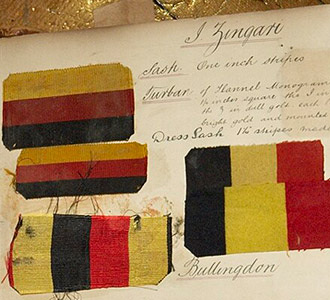
1804: Having inherited the business from his brother, Thomas Davies opens Davies & Son on Hanover Street in Mayfair and goes on to boast that the firm dresses ‘all the crowned heads of Europe’.

1805: James Gieve (founding father of Gieves & Hawkes) is employed by ‘Old Mel’ Meredith, the Portsmouth-based tailor by appointment to the Royal Navy. Meredith tailors the uniform Admiral Lord Nelson is wearing when killed in action aboard H.M.S Victory defeating the combined French and Spanish fleets at the Battle of Trafalgar. Nelson goes to his death wearing a cocked hat designed by James Lock & Co with a green silk eyeshade to cover his blinded right eye. One of Nelson’s last acts before embarking on his last voyage aboard HMS Victory was to settle his bill at James Lock & Co.

1806: James Poole, the founding father of Henry Poole & Co, and his wife Mary make a great success of tailoring for the officers’ troops at the Battle of Waterloo. No tailors are recorded on Savile Row at this time although contemporary firms Davies & Son, Adeney & Boutroy, John Levick, Stultz, Meyer, Burghart and Davidson were colonising various streets surrounding the Row including Clifford Street, Cork Street, Conduit Street, Sackville Street and Hanover Street.

1808: Beau Brummell is at the height of his fame as a man of fashion and sartorial advisor to The Prince Regent (later King George IV). His preferred tailors, military specialists both, are Schweitzer on Cork Street and Meyer on Conduit Street. It is Brummell who introduces the trouser (a variation on riding breeches) to fashionable London. The minimalist, masculine elegance of the dandy espoused by Brummell is a riposte to the excesses that fanned the flames of the French Revolution; replacing gaudy embroidered silk court costume with plain black or navy wool tailcoats and buff breeches, lace jabots with fine linen cravats and buckled satin court shoes with dashing riding boots. London flocks to Brummel’s Chesterfield Street townhouse to watch him bathe and dress as he introduces the concept of daily ablutions and no perfume but the scent of freshly laundered linen into polite society. Brummell is the godfather of Savile Row’s elegant, understated aesthetic.

1818: Burlington Arcade, a glassed-over esplanade of shops adjacent to Burlington House, is constructed under the patronage of Lord George Cavendish who resides at No 1 Savile Row (now Gieves & Hawkes), where Brummell was a guest before his fall from Royal favour and spiralling debts forced him to seek exile in France in 1816.

1821: Joseph Ede, who would eventually give his name to Ede & Ravenscroft, assists guv’nor William Webb as Royal robe maker when The Prince Regent ‘Prinny’ is finally crowned King George IV in particularly overwrought pomp and circumstance after enduring years of deputising for his ‘mad’ father King George III. Walter Grant Norton opens his tailor’s shop on the Strand. Norton & Sons would relocate to Lombard Street in the City and carve a niche for itself as the definitive City tailor before finally relocating to the Row where the firm remains today.

1846: James Poole’s son Henry inherits the firm from his late father and earns his title of ‘Founder of Savile Row’ when he turns the Savile Row-side workshops of his father’s tailoring shop at No 4 Old Burlington Street into a grand, Palladian entrance to a bespoke tailoring business called Henry Poole & Company at No 32 Savile Row.

1849: Henry Huntsman establishes his tailoring firm H. Huntsman & Sons specialising in riding breeches and sporting clothes. Queen Victoria and Prince Albert become customers as do the majority of European Royal houses.

1850: James Lock & Co invents a Savile Row icon: the bowler hat. The bowler was commissioned by William Coke (a relative of the current Earl of Leicester) to be worn by his gamekeepers as protection against falling pheasants and poachers’ sticks. The bowler is still called a Coke at Lock & Co.

1852: James Gieve acquires a partnership with the tailoring house Joseph Galt (established in 1823 and incorporating Meredith) and christens the new firm Galt & Gieves. His equally ambitious sister Elizabeth independently holds Queen Victoria’s Royal Warrant as Dressmaker and Milliner (an honour she holds until her retirement in 1889, a year after James’s death).

1858: Henry Poole earns the first of his Royal Warrants from the newly crowned Emperor Napoleon III of France, to whom Poole and Baron de Rothschild advanced £10,000 to stage a coup in France to establish The Second Empire. At the accession of Emperor Napoleon and his Empress Josephine, Henry Poole erects an audacious gas illuminated eagle-and-coronet light show above the facade of No 36, an act he takes to repeating on all great Royal occasions connected to his customers.

1860: Bertie, the rakish Prince of Wales, orders a short smoking jacket to wear at informal dinner parties at Sandringham from his friend Henry Poole. It is the first dinner jacket on record and was cut in midnight blue cloth. In 1886, a Mr James Potter of Tuxedo Park, New York, is a house-guest at Sandringham. He consequently orders a similar dinner jacket to Bertie’s from Henry Poole & Co. It is this DJ that Mr Potter wears at the Tuxedo Park Club inspiring numerous copies that fellow members wear as informal uniform for stag dinners. Thus the Tuxedo was born at Henry Poole & Co.

1862: Emperor Wilhelm I of Prussia confers his Royal Warrant on Norton & Sons. He is introduced to the house when visiting London as a guest at the wedding of Louis IV, Grand Duke of Hesse and Queen Victoria’s daughter Princess Alice (mother of the ill-fated last Tsarina of Russia).

1865: German immigrant Jacob Dege opens his first tailor’s shop at No 13 Conduit Street. He is the founding father of the tailoring dynasty we now know as Dege & Skinner.

1866: While searching for the source of the Nile, explorer Dr. David Livingstone is rescued by journalist H.M.Stanley. Stanley is dressed by Henry Poole & Co and Dr. Livingstone by Gieves.

1871: Joseph Webb Ede marries Rosanna Ravenscroft, scion of the wig-making dynasty founded in 1726. Six months later, Joseph dies leaving ‘Rosa’ Ede in the director’s chair where she would remain for 60 years. The matriarch holds Queen Victoria’s Royal Warrant. Embroiderer M. Hand moves to Lexington Street, Soho premises to be closer to its customers on Savile Row. A hive of organised industry, cords are woven in the basement, laces on a loom on the ground floor and embroidery on the upper floors.

1875: Angelical Patience Fraser, ‘the tailors’ Florence Nightingale’, begins religious readings in the tailoring sweatshops of Soho and later holds a tailors-against-drink rally in response to the notorious ‘Carnaby Boy’ clique of drunkard tailors who terrorise the area.

1876: Henry Poole dies having penned a sadly prophetic note declaring, ‘There will be nothing much to leave behind me’. Vanity Fair mourns his passing with a fond eulogy that records ‘So Old Pooley is dead’. He has acquired 16 Royal Warrants but the Savile Row tradition of extending unlimited credit to its regal customers leaves the firm in penury. Henry’s sister Mary Ann and his first cousin Samuel Cundey retrench and save Henry Poole from extinction. Thus the Cundey dynasty takes control of Henry Poole & Co.

1880: Jacob Dege’s son Arthur meets William Skinner at Merchant Taylors’ School, Charterhouse Square in the City of London. The friends open Arthur Dege & Skinner but on the death of Arthur’s older brothers, he returns to work for the family firm of J Dege & Sons and the name Dege & Skinner would not reappear above a West End tailor’s shop for another 90 years.

1882: The house we know today as Kilgour opens its doors.

1892: Miss Fanny Hicks is forced to tell her Trade Union Congress in Glasgow that trousers made for Queen Victoria’s grandson the Duke of York (later King George V) were made in a Soho sweatshop where typhoid fever has broken out. Miss Hicks then discloses that Davies & Son (the Duke’s tailor) is a subcontractor of the sweatshop. The scandal of the Duke of York’s Trousers is recorded in The Pall Mall Gazette and compounded by the mysterious death of the Duke’s brother and heir apparent Prince Albert Victor in January 1892.

1895: James Lock & Co delivers a hat to the playwright Oscar Wilde at the St James’s Theatre where his The Importance of Being Earnest is the toast of London. The bill remains unpaid when Wilde is arrested at the behest of his lover Lord Alfred ‘Bosie’ Douglas’s father the Marquis of Queensbury. The bill remains unpaid until 2000, the centenary of Wilde’s death, when a cheque is posted at No 6 St James’s Street discharging Wilde’s debt to the hatter. John Lobb, founder of the famed bespoke shoemaker, dies and in 1901 his son William Lobb moves the business to St James’s Street where it finally settles at No 9, formerly the bachelor quarters of ‘mad, bad and dangerous to know’ poet Lord Byron.

1901: Welsh & Jeffries opens a bespoke tailoring shop on Eton High Street where the firm specialises in making uniforms for Eton College, England’s most prestigious public school.

1902: Henry Poole is the largest establishment on Savile Row employing 300 tailors, 14 cutters and making 12,000 bespoke garments per year. Bertie is crowned King Edward VII and adds his Royal Warrant to a collection that now includes The Crown Prince of Prussia, The King of The Belgians, The Khedive of Egypt, Tsar Alexander II of Russia, King Umberto I of Italy and The Emperor of Mexico.

1912: No 1 Savile Row is purchased from the Royal Geographical Society – where H.M Stanley and Dr. David Livingstone both lectured – by Hawkes & Co for the sum of £38,000 and another £10,000 is spent on converting the premises to suit Hawkes’s business. Hawkes is appointed to dress the Honourable Corps of Gentlemen at Arms, the British Monarch’s nearest bodyguard.

1913: Sidney Horatio Sheppard invests £2000 in Anderson & Simmons (founded 1906) and the firm Anderson & Sheppard is born at No 13 Savile Row.

1917: In the year of the Russian Revolution, Welsh & Jeffries acquire a property at the heart of fashionable St James’s at No 15 Duke Street. The firm makes uniforms for officers of many regiments including The Coldstream Guards and boasts that it has more British Army Generals on its books than any other in Mayfair. Many of them fail to survive the Great War.

1918: World War I fighter pilot Baron Manfred von Richthofen (the Red Baron), a dedicated customer of Norton & Sons, is shot down in action and killed.

1919: H. Huntsman & Sons occupies its present address at No 11 Savile Row.

1921: Crown Prince Hirohito of Japan commissions Henry Poole & Co to create westernised suits for his state tour of Britain. A representative of Poole’s sails to Gibraltar with pattern templates where he meets The Crown Prince’s destroyer and cables measurements to London so the order can be accomplished before the Prince reaches the UK in three weeks time.

1922: Resplendent in Norton & Sons tweeds, philanthropist and bounty hunter Lord Carnarvon and archaeologist Howard Carter discover the tomb of Tutankhamun in the Valley of the Kings, Egypt.

1923: The Duke of York (future King George VI) marries Elizabeth Bowes-Lyon (future Queen Elizabeth The Queen Mother). King George V, the Prince of Wales and the Dukes of York, Gloucester and Kent all wear uniforms tailored by Gieves. So too does H.R.H. The Duke of Edinburgh when he marries Princess Elizabeth in 1947.

1925: It’s the Jazz Age and Kilgour & French employ two Hungarian immigrant tailors, Fred and Louis Stanbury, who become legends on Savile Row and firm favourites with Hollywood royalty. In 1934 the Stanbury brothers create Fred Astaire’s iconic white tie and tails as worn in the Astaire & Ginger Rogers film Top Hat. By 1937 the firm is rechristened Kilgour, French & Stanbury.

1926: Silent Screen idol Rudolph Valentino dies. As the first Hollywood matinee idol on Anderson & Sheppard’s books, Valentino’s tragic yet glamorous aura (not to mention the memory of his immaculate suits) attracts Douglas Fairbanks Sr, Marlene Dietrich, Noel Coward and Gary Cooper to Anderson & Sheppard.

1930: Mayfair’s premier bespoke tailoring houses Henry Poole & Co, H. Huntsman & Co, Anderson & Sheppard, Welsh & Jeffries and Davies & Son enjoy the bounty of India’s Anglophile Maharajahs of Alwar, Baroda, Gwalior, Jaipur, Jodhpur and Cooch Behar who illuminate 30s London’s high society. Henry Poole & Co is awarded The Maharajah of Baroda’s Royal Warrant in 1905, but the dazzling Jitendra Narayan, Maharajah of Cooch Behar (married to one of the era’s great beauties, Indira of Baroda) becomes Poole’s most dazzling and prolific customer. ‘Jit’ Cooch Behar is reputed to have had over 1,000 bespoke suits and uniforms made by the firm.

1932: Family business Hunstman comes under the ownership of the exacting Robert Packer who insists that all garments are cut and sewn in house and not by outworkers.

1939: On the eve of World War II, King George VI suspends the ceremony of holding court in the Royal drawing rooms where unmarried, aristocratic ‘debutantes’ were presented to the sovereign. Queen Elizabeth II would go on to abolish the ceremony entirely. Henry Poole’s father James had modernised Court Dress by the order of Queen Victoria in 1869 from frilly Georgian lace jabot and cuff to a cleaner white tie and winged collar shirt worn with black velvet breeches and tails. In the year of The Wizard of Oz, Gone With The Wind and Now Voyager, Hollywood’s most powerful mogul MGM boss Louis B. Meyer chooses Kilgour, French & Stanbury as his Savile Row tailor of choice. Where Meyer leads, Edward G. Robinson, Rex Harrison, Cary Grant, David Niven, Frank Sinatra and Ava Gardner follow.

1940: Gieves is approached by Charles Frazer-Smith (a character not dissimilar to Q in Ian Fleming’s James Bond books) to develop compass buttons, cavity buttons (concealing explosives, poison pellets and maps printed on silk) and Gili saws (serrated wire on a ring pull concealed in a cap badge) for British espionage agents on active service in Germany and occupied France.

1942: Colin Hammick joins Huntsman as a fifteen year old apprentice. He goes on to rise to the rank of the Head Cutter in the 50s and is largely responsible for pioneering the cut and style that is synonymous with Huntsman today.

1945: Hardy Amies, the first post-war haute couturier in London, restores the derelict husk of a Regency house at No 14 Savile Row that had suffered a direct hit in the Blitz and opens his doors for business.

1952: Douglas Fairbanks Jr declares, ‘Savile Row has recaptured the tailoring supremacy of the world.’ Fairbanks Jr is one of the 20th century heroes of Savile Row. It is recorded in Anderson & Sheppard’s ledgers that he recommended Marlene Dietrich to the firm when she was in England making the Russian revolution epic Knight Without Armour.

1953: Queen Elizabeth II is crowned with the tailoring firms Wilkinson & Son (owned by J. Dege & Sons) and Ede & Ravenscroft in attendance at Westminster Abbey to dress the monarch, visiting royals and peers of the realm for what is the most elaborate ceremonial occasion in the nation’s calendar. The military uniforms, the ambassadors’ court dress and national and colonial liveries on display show off the mastery of the grand old Savile Row houses of Henry Poole, Davies & Son and Welsh & Jeffries.

1955: Hardy Amies is granted The Queen’s Royal Warrant and remains court dressmaker until his retirement in 2002. Stanley Lock takes over C E Phipps, which was founded in 1898 to produce embroideries for the burgeoning fashion industry.

1958: G.J. Cleverley, Savile Row’s preferred bespoke shoemaker, opens at 27 Cork Street in Mayfair. The firm goes on to make shoes for Sir Winston Churchill, Laurence Olivier, Fred Astaire, Clark Gable and Sir John Gielgud.

1959: Kilgour, French & Stanbury create Cary Grant’s iconic suits for Alfred Hitchcock’s North by Northwest. Savile Row is recognised as the pinnacle of masculine elegance by cinema goers worldwide and North by North West and Grant achieve for bespoke Savile Row tailoring what Audrey Hepburn and Breakfast at Tiffany’s did for haute couture and ‘the little black dress’ two years later in 1961.

1961: Tragedy strikes Henry Poole & Co. The lease expires on Poole’s Savile Row palace and the company is forced to relocate to Cork Street. Despite protests in The Daily Telegraph, Poole’s inexplicably unlisted building is raised to the ground. Lost during this period are the patterns cut for iconic Poole customers Napoleon III, Wilkie Collins, Charles Dickens and Edward VII. Mercifully, the firm’s ledgers survive. Hawes & Curtis predict a glowing future as a ‘first class tailor’ for apprentice John Pearse. Instead, Pearse drops-out, tours Europe, then opens the infamous boutique ‘Granny Takes A Trip’ in the Kings Road in 1965, where he dresses Jimi Hendrix, Bob Dylan, The Rolling Stones and The Beatles.

1963: Maurice Sedwell opens his shop on Savile Row.

1966: H. Huntsman & Sons is invited to make bespoke suits for the England football team which wins the World Cup.

1967: Tommy Nutter and Edward Sexton meet as salesboy and cutter respectively at Donaldson, Williams & Ward in Burlington Arcade. They will go on to form the most creative partnership in Savile Row’s history.

1969: Nutters of Savile Row opens on Valentine’s Day and unleashes the Tommy Nutter/Edward Sexton style on swinging London. Backed by Cilla Black and The Beatles’ record company Apple’s executive Peter Brown, Nutters of Savile Row dresses the entire social spectrum from the Duke of Bedford and Lord Montagu to Mick and Bianca Jagger and The Beatles. Nutters is the first shop on Savile Row to pioneer ‘open windows’ and exhibits some wild displays by Simon Doonan. Mount Street bespoke tailor to the stars Douglas Hayward dresses Michael Caine in the famous bullion robbery caper The Italian Job. Caine’s skinny suits and tone-on-tone white shirt and tie combinations set a cocky, sharp tailored style that resonates today.

1971: Maverick screen actress Katherine Hepburn, whose long-term lover Spencer Tracey was a customer of Huntsman, takes the extraordinary step of ordering bespoke denim jeans from her late lover’s Savile Row tailor. Hepburn’s commission foreshadows bespoke denim collections launched in 2006 by Timothy Everest and Evisu. Huntsman’s very stylish Head Cutter Colin Hammick tops Savile Row devotees Rex Harrison, Lord Snowdon and the Duke of Windsor in Tailor & Cutter magazine’s prestigious best dressed list.

1973: Robert Redford stars in the definitive film of F. Scott Fitzgerald’s The Great Gatsby. Fitzgerald was a dedicated customer of Jermyn Street bespoke shirt maker Turnbull & Asser. The shirts that reduce The Great Gatsby’s socialite heroine Daisy (Mia Farrow) to tears with their beauty in the film all bear the Turnbull & Asser bespoke label.

1974: Gieves Ltd acquires Hawkes (and the precious freehold of No 1 Savile Row) and becomes Gieves & Hawkes.Tommy Nutter seeks sanctuary at Kilgour, French & Stanbury after his acrimonious exit from Nutters of Savile Row. Kilgour also incorporates the famed hunt tailoring specialist Bernard Weatherill. Nutters of Savile Row continues with Sexton, Roy Chittleborough and Joseph Morgan. Maurice Sedwell hires Trinidad-born Andrew Ramroop who will go on to become Managing Director and a Professor of tailoring at the London College of Fashion.

1976: Gieves & Hawkes and Anderson & Sheppard alumnus Anthony Hewitt opens his own bespoke tailoring shop on Savile Row, A.J.Hewitt. The company prospers thanks to the Middle Eastern oil boom and the advent of young cutters Ravi Tailor and James Levett in 1979.

1978: 007 actor Roger Moore becomes a tax exile and invites his friend and tailor Douglas Hayward to his Cote d’Azur villa to dress him for the next James Bond film For Your Eyes Only. It is acknowledged that Hayward’s back-to-classic navy pinstripe three-piece suit is Bond at his sartorial best.

1979: Davies & Son is forced to leave its handsome Hanover Street townhouse where a private room had been set aside for King George V that was fitted with a tube not dissimilar to a hose pipe which communicated with the tailors upstairs. While clearing out the attic sets, which were reserved as places of assignation for titled customers to meet their mistresses, the firm discovers a bill for Sir Robert Peel (founder of London’s first Police Force) from 1829.

1980: A year into Margaret Thatcher’s reign as British Prime Minister, Andrew Ramroop becomes unofficial tailor to half the Tory Cabinet who restore a pride in Savile Row bespoke tailoring to the corridors of power in the Palace of Westminster.

1981: H.M.Sultan Qaboos of Oman confers his exotic Royal Warrant on J.Dege & Sons. In arguably the most exotic commission conferred on a Savile Row tailor, Sultan Qaboos commanded Dege & Skinner to create uniforms for his Royal Oman Police Camel Pipe Band.

1981: H.R.H. The Prince of Wales marries Lady Diana Spencer at St Paul’s Cathedral. Gieves & Hawkes make the uniform for Prince Charles while the pageboys – including Lord Frederick Windsor and Edward van Cutsem – are dressed in Naval Cadet uniforms that were originally made by the firm for Prince Charles’s Grandfather King George VI and his Great Uncle The Duke of Windsor when they served as Royal Navy Cadets aboard H.M.S. Britannia. Roy Chittleborough & Joseph Morgan part company with Edward Sexton and continue trading under their own names. Edward Sexton opens his shop at 37 Savile Row and cements his reputation as Savile Row’s jet setting export, establishing a formidable business in the United States.

1982: Henry Poole MD Angus Cundey brings the firm back to Savile Row after twenty-years in exile on Cork Street.

1984: 24 year old East Ender Mark Powell opens Powell & Co on Soho’s Archer Street. His look – a re-mix of sartorial influences such as Neo-Edwardian, 30s Mobster and 60s Kray twin chic – pays homage to the creativity of Tommy Nutter and paves the way for the new generation of Savile Row tailors of the 1990s.

1985: After an encounter with Federico Fellini in Rome and a subsequent career as a maverick filmmaker, John Pearse returns to tailoring and opens a shop on Soho’s Meard Street.

1990: H.R.H. The Prince of Wales appoints Welsh & Jeffries his military tailor.

1991: Former Tommy Nutter apprentice Timothy Everest – who answered Nutter’s newspaper advertisement for a ‘Boy Wanted’ – opens his first bespoke tailoring shop in an East End Georgian townhouse declaring, ‘Opening a shop on Savile Row would be like moving in with my parents.’

1992: Richard James, the first of the ‘New Generation’ tailors, opens a shop on Savile Row. James introduces Saturday opening (a revolution on Savile Row) and a fashionable edge not seen since The House of Nutter’s glory days. Tommy Nutter dies. As a fitting epitaph, the outlandish purple suit Jack Nicholson wears playing The Joker, which was one of Nutter’s final commissions, appears on screen in Tim Burton’s Batman Returns.

1996: Ozwald Boateng unleashes his exotic, electric concept of Bespoke Couture on Savile Row from his new shop at No 9 Vigo Street.

1997: Ozwald Boateng, Richard James and Timothy Everest are christened ‘The New Generation’ on Savile Row and photographed by Michael Roberts for the London Swings Again issue of Vanity Fair. Alan Bennett buys Davies & Son, and incorporates Johns & Pegg, James & James, and Wells of Mayfair. Gianni Versace is shot dead outside his Miami palazzo. It emerges that in his later years the designer had become a bespoke customer at J. Dege & Sons (now Dege & Skinner), in addition to buying made-to-measure from Richard James. Diana, Princess of Wales is tragically killed in a car accident with Dodi Al Fayed in Paris on August 30th. Orders under construction for the Princess that were never collected are still held by Maurice Sedwell on Savile Row, John Lobb on St James’s Street and Turnbull & Asser on Jermyn Street.

1998: A.J. Hewitt acquires the colonial bespoke tailoring specialist Airey & Wheeler.

2000: Richard James acquires one of the biggest shop spaces on Savile Row at No 29. The ‘goldfish bowl’ glass windows slice Savile Row and Clifford Street at right angles like a breathtaking infinity pool of bespoke, made-to-measure and ready-to-wear Richard James.

2001: Former Huntsman head cutter Richard Anderson opens his bespoke tailoring house at No 13 Savile Row. His partner and co-founder is Brian Lishak, a Huntsman man with half a century of experience on the Row.

Having apprenticed while still at St Martin’s fashion college with Edward Sexton, Stella McCartney invites Sexton to develop the tailoring for her debut as creative director of Chloe. On the embroidery front, S. Lock and M. Hand come together to form Hand & Lock.

2002: In an intriguing collaboration, former Anderson & Sheppard apprentice and enfant terrible of British fashion Alexander McQueen unveils a bespoke collection made by H. Huntsman & Sons and sold on Savile Row. The exquisite but prohibitively costly enterprise is quietly terminated.

Nick Hart opens Spencer Hart at 36 Savile Row, combining a bespoke sensibility with the severe chic of old school Prada, Jil Sander and Helmut Lang. He goes on to dress David Bowie, Jay-Z, Jamie Foxx and Kanye West.

2003: After a management buyout, Kilgour drops the French & Stanbury and appoints Carlo Brandelli as creative director. The house sets about ‘sexing-up’ Savile Row in a strategy not dissimilar to Tom Ford’s at Gucci in 1995.

Sir Hardy Amies, a Savile Row legend and one of its greatest patrons, dies. He is succeeded by his protégée Ian Garlant, who remains creative director of the house.

2004: The Savile Row Bespoke Association, the organisation designed to represent bespoke tailors’ interests on the Row, is formed. Founder members include the Royal Family of bespoke tailoring: Anderson & Sheppard, Dege & Skinner, Gieves & Hawkes and Henry Poole. Having flirted with liquidation, H. Huntsman & Sons is saved by four sympathetic investors including present MD David Coleridge. The Savile Row Bespoke Association acts to protect the craft and good name of Savile Row and ward off interlopers by registering the Savile Row Bespoke Association label. The label is to appear in each of the Savile Row Bespoke Association members’ bespoke garments and serves as a guarantee to the customer that he or she is in receipt of a genuine, bespoke, made on Savile Row item.

2005: Anderson & Sheppard is forced to vacate No 30 Savile Row and relocate to 32 Old Burlington Street. Gieves & Hawkes make morning coats for The Princes William and Harry to wear at the wedding of their father Prince Charles to Camilla Parker-Bowles (now Duchess of Cornwall). Timothy Everest edges closer to Savile Row with a bespoke and made-to-measure studio on Bruton Place in Mayfair. Young entrepreneur Patrick Grant and his investors acquire Norton & Sons from the Granger family. Tom Ford exits Gucci Group as creative director and commissions Anderson & Sheppard to make white tie and tails for a defiant photo shoot in W magazine to publicise the launch of his own bespoke tailoring house. Embroiderers Hand & Lock move to Margaret Street.

2006: Gieves, the fashion-led boutique brand within Gieves & Hawkes designed by Joe Casely-Hayford, is shown on the catwalk during Paris Fashion Week for the first time. Henry Poole’s Savile Row lease is signed for a further 15 years and both shop and workshops are gutted and refurbished to bring Poole’s into the 21st Century. Ozwald Boateng’s US reality TV show The House of Boateng is aired on Robert Redford’s Sundance Channel and brings his vision of New Generation Savile Row dandyism to the cable generation. Chittleborough & Morgan open a new space in the basement of No 12 Savile Row. Richard Anderson rocks the Row with a black sequin dinner jacket that is ordered by Bryan Ferry and photographed worldwide. Douglas Hayward’s daughter Polly succeeds her father as MD of the company.

2007: Florentine fashion foundation Pitti Immagine Uomo commission the first major exhibition dedicated to Savile Row bespoke tailoring. Titled The London Cut, The exhibition runs for a month at Palazzo Pitti and is accompanied by a book written by the curator James Sherwood. The Chambre Syndicale de la Haute Couture invites Savile Row to bring The London Cut to the British Ambassador’s residence in Paris during July Couture Week. Richard James opens a new shop on Clifford Street dedicated entirely to his bespoke service while Ozwald Boateng takes Anderson & Sheppard’s old site at No 30 Savile Row for his first flagship store and cutting room. After a brief, unhappy marriage between Japanese jeans brand Evisu and Anthony J Hewitt, Hewitt MD Ravi Tailor leaves the Row to work from L.G. Wilkinson on St George’s Street. Robert Gieve, the fifth and last generation of the family to serve Gieves & Hawkes, dies.

2008: The legendary celebrity tailor Douglas (The Italian Job) Hayward dies. A new Archive Room at Gieves & Hawkes at No 1 Savile Row is curated by James Sherwood and inaugurated in honour of the late Robert Gieve. In March 2008 The London Cut exhibition is invited to show at the British Ambassador’s Residence in Tokyo. A satellite exhibition then travels to Isetan in Tokyo where Savile Row dominates the prestigious store’s windows and exhibition space. A three one-hour episide documentary mapping a year in the life of Savile Row is aired on BBC4 while BBC2 follows The London Cut to Tokyo for a further British fashion series to be aired in the autumn. One of the Row’s best dressed men, former Huntsman Head Cutter Brian Hammick, sadly dies.

2009: Queues form when Savile Row puts on its revealing ‘Below the Row’ show for one of the Victoria & Albert museum’s Friday Late exhibitions. Curated in conjunction with the V&A by students Chris Pollard and Susan Paisley, the exhibition shines light on the ‘dark art’ of bespoke tailoring by creating a working tailor’s shop and rarely seen subterranean workshop. The public’s increasing interest in the inner goings on of the Row is served with the publication of Richard Anderson’s fascinating book Bespoke: Savile Row Ripped & Smooth.

2010: Savile Row gathers en masse at the vibrantly refurbished Savoy hotel in London to celebrate the publication of James Sherwood’s definitive study of the Row’s inhabitants and their craft, Savile Row: The Master Tailors of British Bespoke. To help the occasion along, the Savoy invents the Savile Row Collins, a fine, stealthy gin based cocktail. Onlookers are agog as sheep appear on a grassed over Row for the hugely successful Savile Row Field Day, which is held in support of the Campaign for Wool, whose aim it is to increase demand and awareness of the wool industry.

2011: Another insider’s account of life on the Row as Michael Skinner’s (He of Dege & Skinner) enthralling book The Savile Row Cutter is published. The 150th anniversary of the tuxedo is celebrated by its inventor Henry Poole & Co and students of the London College of Fashion, who, in conjunction with fabric supplier Dormeuil, set about re-inventing the iconic jacket. The 21st century tuxedos go on display in Harrods and Burlington Arcade in London before appearing at the tuxedo historical society in New York. Does any other jacket have its own historical society?